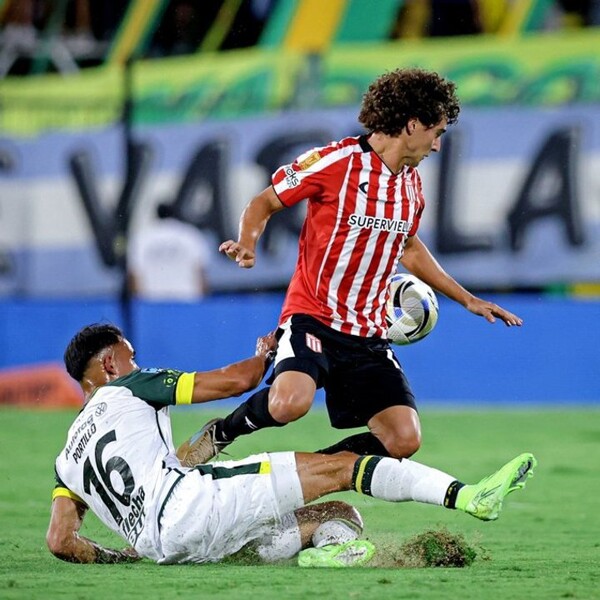
The appeal for unity came in a tense climate, with leaders questioning recent AFA decisions and demanding a review of the refereeing and organizational functioning. Tapia also directly pointed to the president of Estudiantes de La Plata, Juan Sebastián Verón, in a remark that surprised those present. He recalled that the 'pincharrata' team 'played two days before Barracas Central, was out of the promotion zone, and, because Huracán and Belgrano de Córdoba did not win, it qualified and is now fighting for the title.' Many interpreted this as a political message amidst internal realignments. However, while Tapia seeks to regain the narrative, there is growing concern in the background about an investigation into a financial company accused of money laundering, in which his name has been mentioned. Buenos Aires, November 27, 2025 – Total News Agency-TNA – Amidst a growing wave of criticism of his management and the political-judicial noise surrounding a financial company accused of money laundering with which he is linked, Claudio 'Chiqui' Tapia affirmed that he has 'many more years' ahead as president of the Argentine Football Association (AFA). His words, far from calming the climate, suggest that the coming months could be decisive for the AFA's leadership board. Controversies in the Primera Nacional's promotion zone, similar issues in the Professional League, and a scandalous title awarded to Rosario Central from the AFA's offices have once again put him under intense public scrutiny. Although the AFA president avoided referring to the case, the feeling among leaders and politicians is that the issue forces him to defend his position with unusual firmness. His leadership, which began in 2017, is facing one of its most tense moments since coming to power, with major clubs demanding profound changes and greater transparency. Tapia told his peers: 'This is not the first time we've experienced this. Three presidents have passed in almost nine years of my presidency of Argentine football, and I have many more years to go.' For several figures in football, the episode explains the hardening of his stance and his repeated references to 'the struggles that take place from within.' Thus, the head of Argentine football finds himself in a scenario where sporting, internal, and judicial tensions converge, while he insists his continuity is not up for discussion. With that phrase, he made it clear that he does not contemplate leaving his post early and that, when his term ends, 'those who want to will have the opportunity to present themselves,' emphasizing that disputes must be settled 'from within, face to face.' In his speech, he also sought to defend the work of the Argentine football ecosystem, stating that 'the only ones who give value to Argentine football are the players, the coaches, and the leaders who make an effort to form competitive teams and tournaments where everyone has the same chance.' The declarations, made during the Alumni Awards, were interpreted in the leadership sector as an attempt to reaffirm power and 'play for time' in an increasingly adverse scenario. Tapia has been going through two particularly critical weeks.

AFA President Tapia Asserts Long-term Leadership Amidst Scandal
AFA President Claudio Tapia, amid growing criticism and an investigation into his links with a financial company accused of money laundering, asserted his long-term leadership of Argentine football, stating his position is not up for debate.